
Webinar: The Hidden Cost of Data Chaos in Private Credit Watch Now

Tech Corner April 22, 2026


This is the second in a series of posts on how Alkymi is transforming loan data workflows. You can see the first post here: The Data Bottleneck in Private Credit is an AI Problem.
For credit operations teams, loan agent notices are where the data lifecycle begins. Every rate reset, principal paydown, and interest payment arrives as a notice, and that data needs to flow quickly and accurately into the systems and tools your team actually uses: Aladdin, AllVue, Geneva, WSO, PAM, Charles River IMS, Snowflake, DataBricks, SimCorp, Clearwater, or whatever combination your firm runs.
The problem is that most firms are relying on their loan system to handle the data lifecycle, yet most of these platforms only handle it partially. If you’re running WSO, you have solid automation for WSO-generated notices. But your portfolio, though, isn’t composed solely of agents using WSO. The rest - Alter Domus, GLAS, LoanIQ, various white-label solutions used by major US & EMEA banks – still land in your team’s inbox and require manual processing.
These aren’t just minor differences in layout, but materially different formats that require tailored approaches to identify the same underlying data. Here are some sample formats that highlights the data complexity facing credit ops teams:
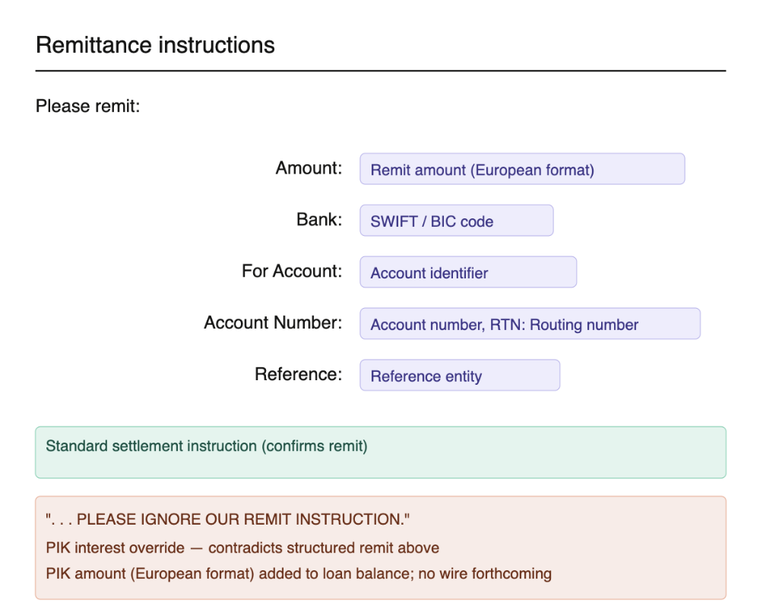
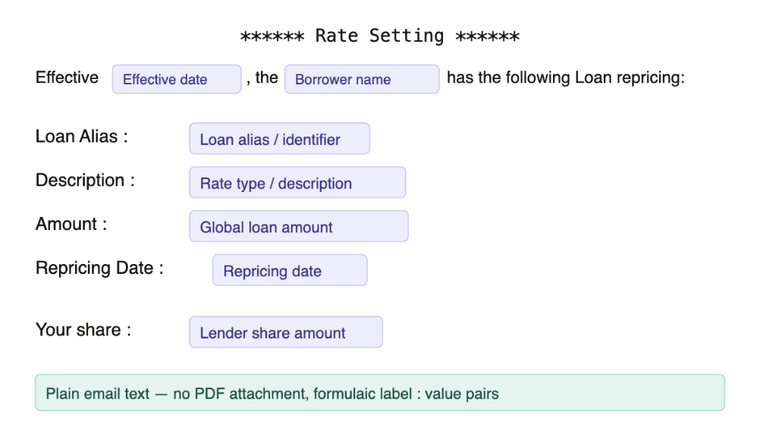
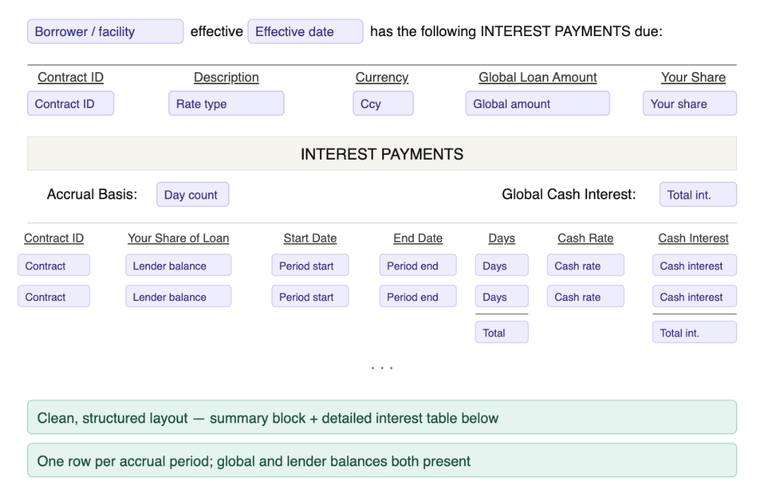
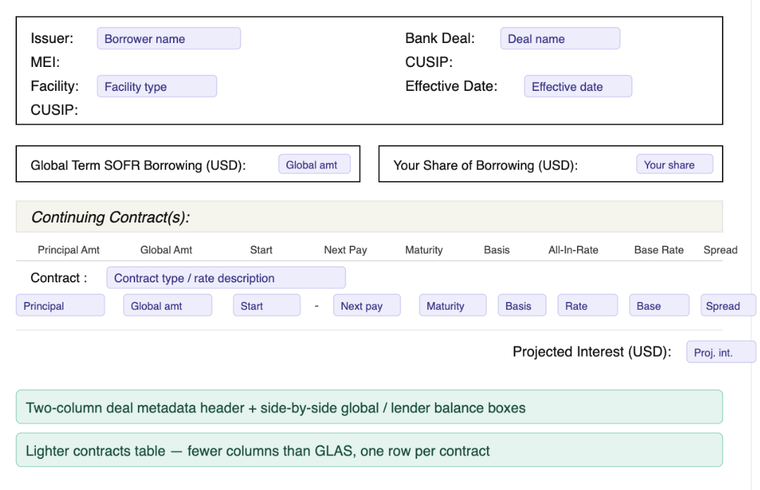
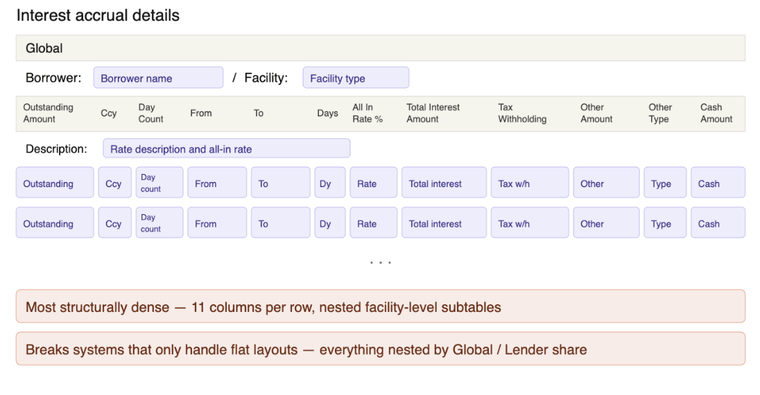
Format coverage matters because the data has to go somewhere. ‘Somewhere’ may mean portfolio systems like Aladdin, Allvue, PAM, or Geneva, a datalake/warehouse like Snowflake or Databricks, or a combination of these platforms and in-house solutions. Regardless of the destination, getting notice data into those systems requires clean, structured handling first.
This is where a lot of WSO-centered workflows hit a wall. WSO works well for WSO-format notices. For everything else, especially in diversified portfolios, that’s a significant share of volume, the data ingestion is manual, which means the downstream posting is often still manual, too.
Alkymi is different. We identify 100+ client-tailored fields regardless of format: borrower, facilities, rates, amounts, dates, banking details, and more. That includes cases that come up more often than you’d expect, like non-US number formatting and free-text overrides that contradict the structured data. The output is standardized and ready to push downstream to whatever system your firm uses today.
Connect with us to see how this works against your specific notice formats and loan portfolio workflow.

Alkymi joins The Private Markets Forum’s LP Tech Market Map, providing trusted data infrastructure and AI-powered automation for private markets.

InvestOps Europe 2026 highlighted how firms can scale private markets operations with trusted data, connected workflows, and AI built for production.

Key takeaways from TSAM New York 2026 on AI in production, trusted data, scalable operations, and the operational readiness gap in private credit.