Insights from LP Tech Summit 2026: Building the Infrastructure for Agentic AI in Private Markets
Private markets firms are exploring how AI can move beyond answering questions to completing operational work. As agents gain the ability to interact with enterprise systems, the challenge becomes more consequential: how do firms give AI the access it needs while maintaining control over the actions it takes?
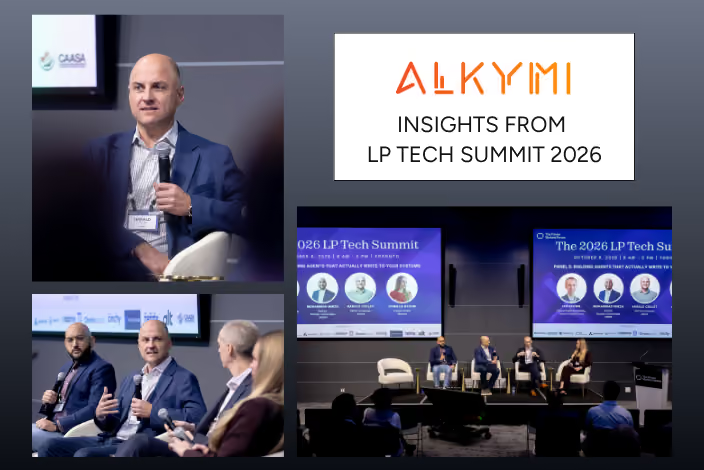
That question framed Alkymi’s participation in the 2026 LP Tech Summit, held on October 6 in Toronto. Under the theme “Building the LP Operating System,” the summit brought together investment, operations and technology leaders to explore the infrastructure supporting private markets. The agenda connected data architecture and portfolio visibility with AI adoption and organizational change.
For Alkymi, these themes point to a practical priority: turning private markets documents into trusted data that can support reliable, governed automation.
Taking agentic AI into production
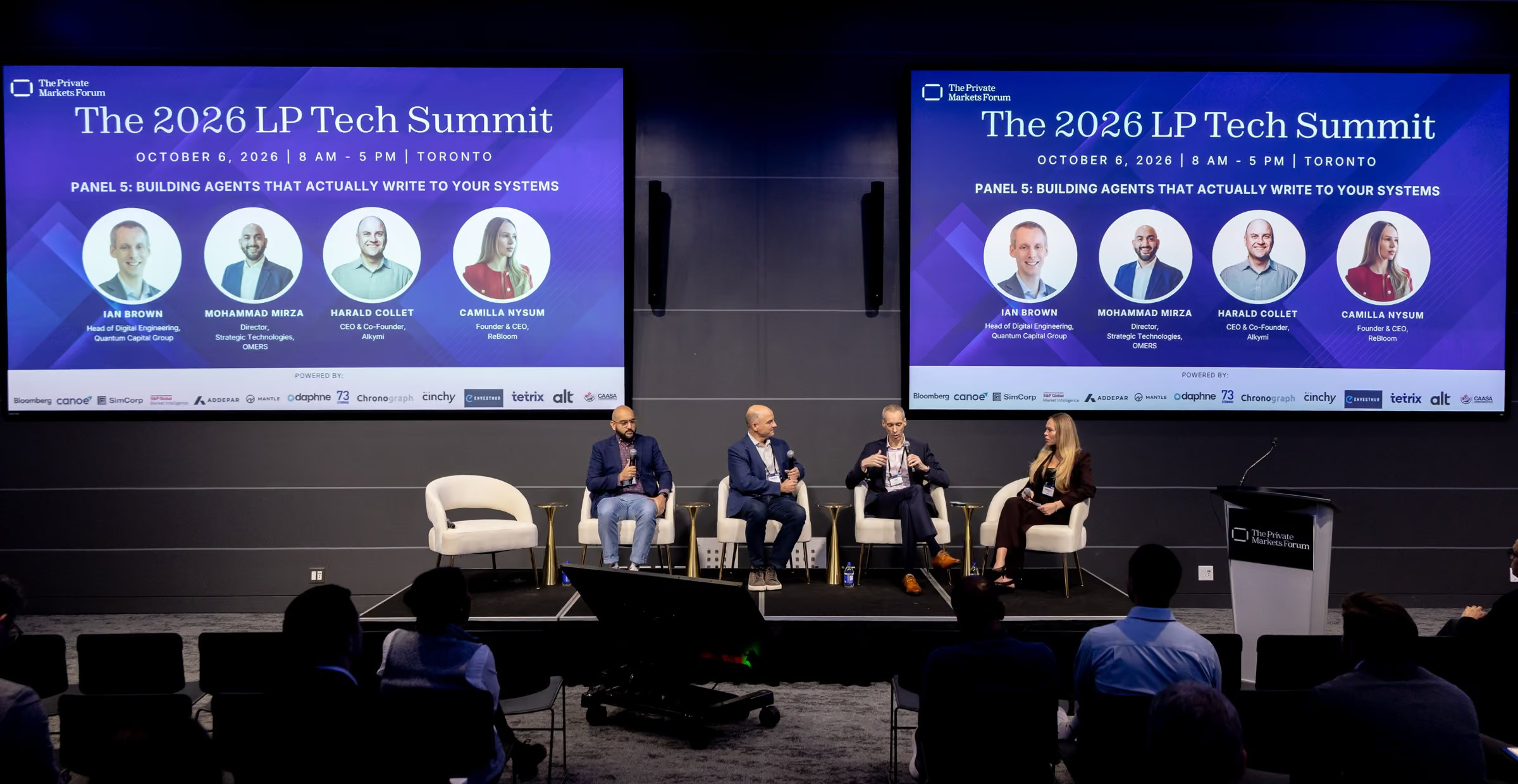
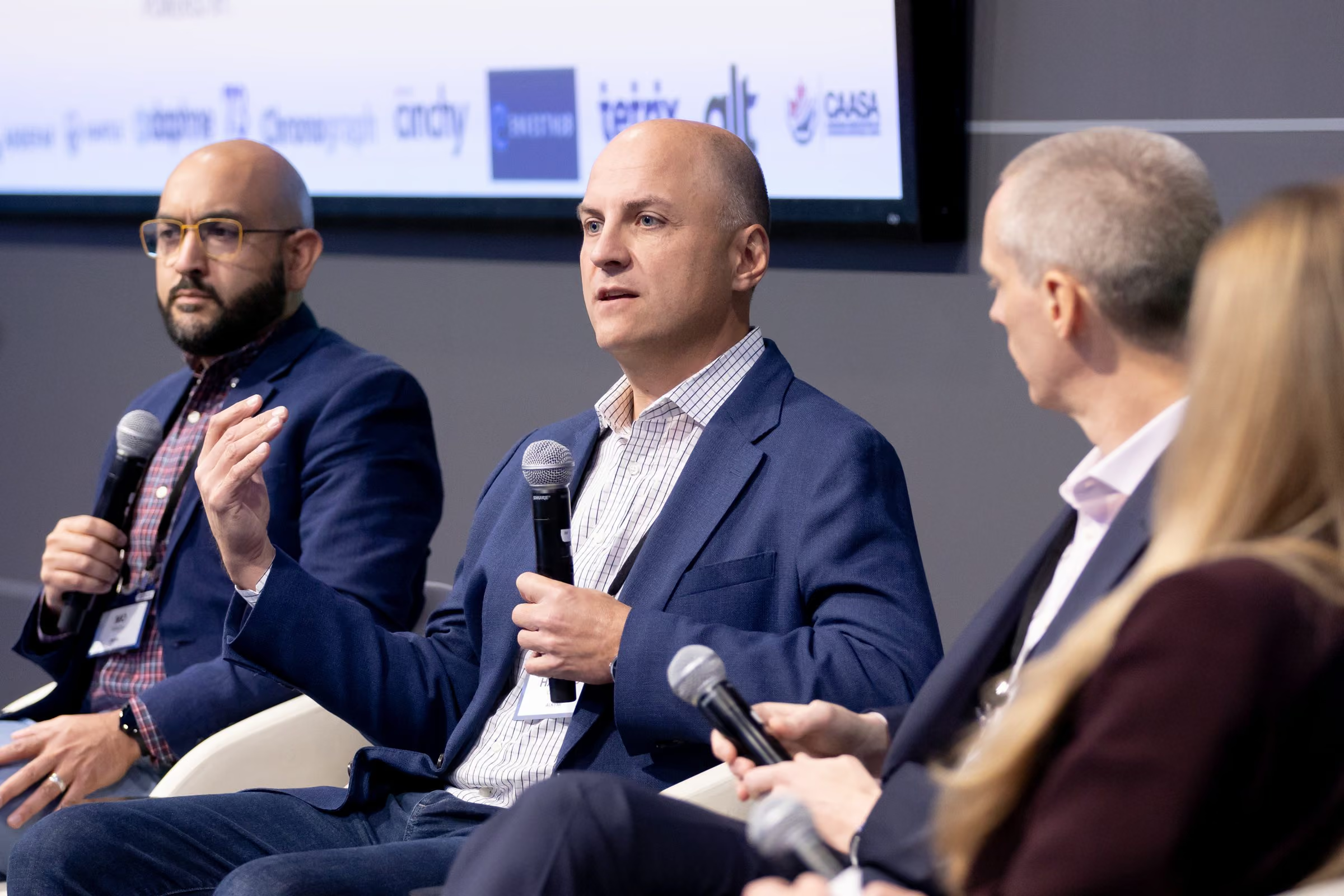
Alkymi CEO and Co-Founder Harald Collet joined Ian Brown, Head of Digital Engineering at Quantum Capital Group, and Mohammad Mirza, Director, Strategic Technologies at OMERS, for “Building Agents that Actually Write to Your Systems.” Moderated by Camilla Nysum, Founder and CEO of ReBloom, the session brought together GP, LP and technology provider perspectives on deploying agents within investment organizations.
Building on the earlier sessions, the panel’s focus was practical deployment: where agents can contribute, what access they should have and how firms can build confidence in their work.
An agent that summarizes a document and an agent that updates a system of record carry different responsibilities. Writing data into an accounting platform, initiating a workflow or updating an investment record requires clear rules about what the agent can do, what must be validated and when a person needs to approve the next step.

Define the workflow before expanding autonomy
For private markets firms, a useful starting point is a bounded workflow with a clear outcome.
Consider a capital call notice. An agentic workflow could retrieve the document, identify the fund, extract and validate key information, and post approved data directly into an accounting system. Exceptions would route to a reviewer, with approval requirements defined by the firm.
Each step needs an explicit definition of success. The firm must also decide which actions can proceed automatically and which require approval.
This creates a practical path to deployment: establish a reliable process, measure its performance and expand autonomy as evidence supports it.
Build confidence through controls and visibility
Giving an agent a role in an operational process requires accountability across people, systems and technology providers.
Firms evaluating these workflows should be able to answer a few essential questions:
- What information can the agent access, and which actions can it perform?
- Can each proposed update be traced to its source document?
- Where are validation and human approval required?
- How are errors detected, corrected and escalated?
- Who owns the workflow once it is running?
These controls should shape the initial design. They also provide a more meaningful basis for evaluating vendors than a demonstration alone: can the workflow operate reliably within the firm’s permissions, review requirements and existing systems?
Connect AI tools to governed enterprise workflows
Deploying agents also raises an important question: how should familiar AI interfaces connect to enterprise systems and workflows?
As firms consider tools such as Claude and ChatGPT for operational use, they need to define how those interfaces access corporate information and interact with business systems. Access to documents is one consideration. Permission to change an investment record is another.
The Model Context Protocol, or MCP, provides a standardized way for AI applications to connect with external data and tools. MCP tools can expose functions that call underlying APIs, allowing an AI application to discover and invoke available actions through a common interface.
For investment firms, connectivity is only part of the decision. Any integration still needs appropriate permissions, validation, monitoring and operational ownership.
Make build-versus-buy decisions around the full lifecycle
Agentic AI also brings a familiar technology question into sharper focus: what should firms build internally, and where should they work with specialist providers?
The answer should account for the ongoing work of maintaining integrations, evaluating outputs, managing exceptions and adapting to changes in models and systems.
Internal teams bring knowledge of their organization’s processes and investment requirements. Technology partners can contribute domain expertise and established capabilities. A sustainable approach connects those strengths while keeping responsibility for the workflow clear.

Trusted infrastructure for the next stage of AI
Agentic AI raises the stakes for data quality. When an automated workflow acts on information, errors can move directly into downstream systems and processes.
At Alkymi, our focus is on helping investment firms turn complex private markets documents into trusted, actionable data through automated retrieval, extraction and validation. That foundation supports a more reliable path from AI experimentation to operational use.
Alkymi is the Trusted Infrastructure for Private Markets.